

Struggling with restless nights or difficulty falling asleep? Your diet may be playing a bigger role than you think. Certain foods contain natural compounds such as magnesium, melatonin, tryptophan, and serotonin, which help calm the nervous system and prepare the body for sleep.
While food alone won’t cure chronic insomnia, choosing the right evening foods can support relaxation, improve sleep quality, and reduce nighttime awakenings. In this guide, you’ll discover the best foods that help you sleep naturally and how to include them in your nightly routine.
How Food Affects Sleep Quality
Sleep is closely connected to nutrition. What you eat in the evening can influence:
- Melatonin production (your sleep hormone)
- Muscle relaxation and stress levels
- Blood sugar stability during the night
- Serotonin activity, which supports calmness
Foods rich in magnesium, healthy fats, antioxidants, and amino acids help create the ideal internal environment for deeper, more restorative sleep.
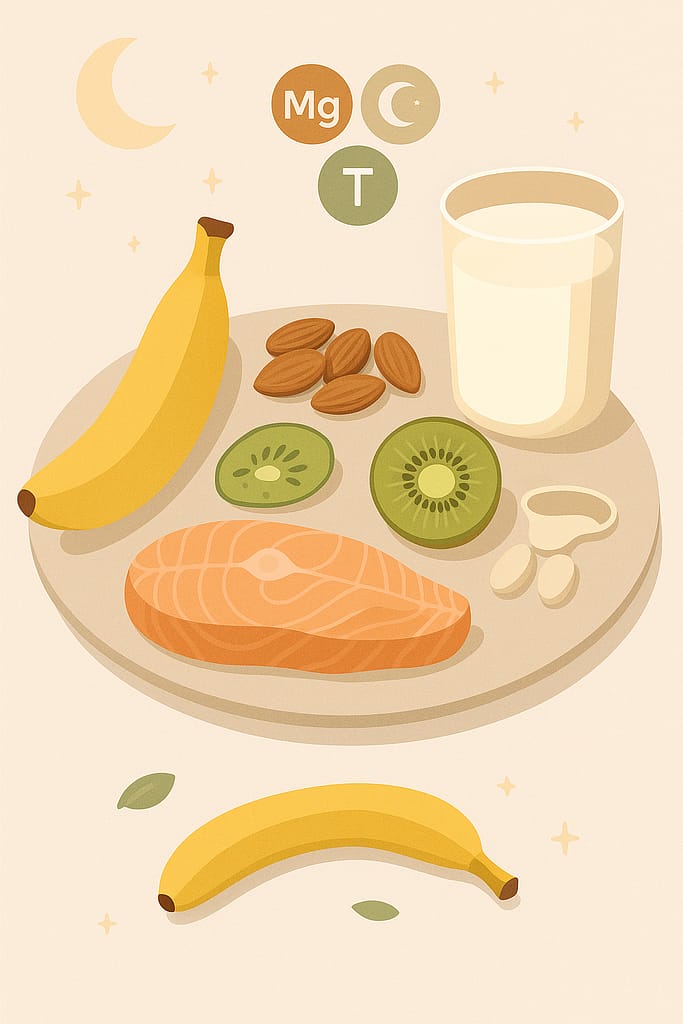
Best Foods That Help You Sleep Naturally
1. Bananas: Relax Muscles and Calm the Nervous System
Bananas are a natural source of magnesium and potassium, two minerals that help relax muscles and reduce tension. They also contain tryptophan, an amino acid that supports the production of melatonin.
Benefits:
- Relaxes muscles and reduces nighttime cramps
- Supports natural melatonin production
- Easy, light evening snack
Tip: Eat one banana about 30 minutes before bedtime for best results.
2. Almonds: A Natural Source of Magnesium and Melatonin
Almonds are one of the best plant-based sources of magnesium, a mineral strongly associated with improved sleep quality. They also contain small amounts of melatonin.
Benefits:
- Improves sleep depth and quality
- Reduces nighttime awakenings
- Provides healthy fats and protein
How to use: Enjoy a small handful of almonds or a spoon of almond butter in the evening.
3. Fatty Fish: Omega-3s for Deeper Sleep
Fatty fish such as salmon, mackerel, and sardines are rich in omega-3 fatty acids and vitamin D. These nutrients support serotonin production, which helps regulate sleep cycles.
Benefits:
- Increases sleep duration and efficiency
- Supports hormone balance
- Promotes overall relaxation
Tip: Include fatty fish in your dinner 2–3 times per week for long-term sleep benefits.

4. Warm Milk: A Classic Natural Sleep Aid
Warm milk has been used as a sleep remedy for generations. It contains tryptophan, which helps increase serotonin and melatonin levels.
Benefits:
- Promotes relaxation and drowsiness
- Helps calm the mind before bed
- Creates a comforting nighttime ritual
How to use: Drink a glass of warm milk with a pinch of cinnamon about 30–60 minutes before sleep.
5. Kiwi: A Powerful Fruit for Sleep Support
Kiwi is rich in serotonin, antioxidants, and vitamins C and E, all of which play a role in regulating sleep patterns.
Benefits:
- Reduces the time it takes to fall asleep
- Improves sleep duration and efficiency
- Supports overall health and immunity
Tip: Eat 1–2 kiwis about an hour before bedtime.
Foods to Avoid Before Bed
Some foods can interfere with sleep and should be limited in the evening:
- Caffeinated drinks (coffee, energy drinks, some teas)
- Sugary snacks that cause blood sugar spikes
- Heavy, greasy meals
- Alcohol, which disrupts sleep cycles
Avoiding these foods can significantly improve sleep quality.
Frequently Asked Questions
What foods help you fall asleep faster?
Foods rich in magnesium, tryptophan, and melatonin—such as bananas, almonds, kiwi, and warm milk—can help you fall asleep faster.
Is food enough to fix sleep problems?
Food supports sleep, but it works best when combined with good sleep hygiene, stress management, and a consistent bedtime routine.
Can magnesium from food improve sleep?
Yes, magnesium-rich foods can support relaxation and sleep quality. In some cases, supplements may also help.
Conclusion
Improving your sleep doesn’t always require supplements or medications. By incorporating sleep-friendly foods like bananas, almonds, fatty fish, warm milk, and kiwi into your evening routine, you can support relaxation and enjoy more restful nights naturally.
Small dietary changes, combined with healthy sleep habits, can make a noticeable difference in how well you sleep.
Some links in this article are affiliate links. As an Amazon Associate, PIEWell earns from qualifying purchases — at no extra cost to you. We only recommend products we’ve researched thoroughly.
Related Articles
👉 Best Essential Oils for Sleep
👉 How to Improve Sleep Quality