
Introduction
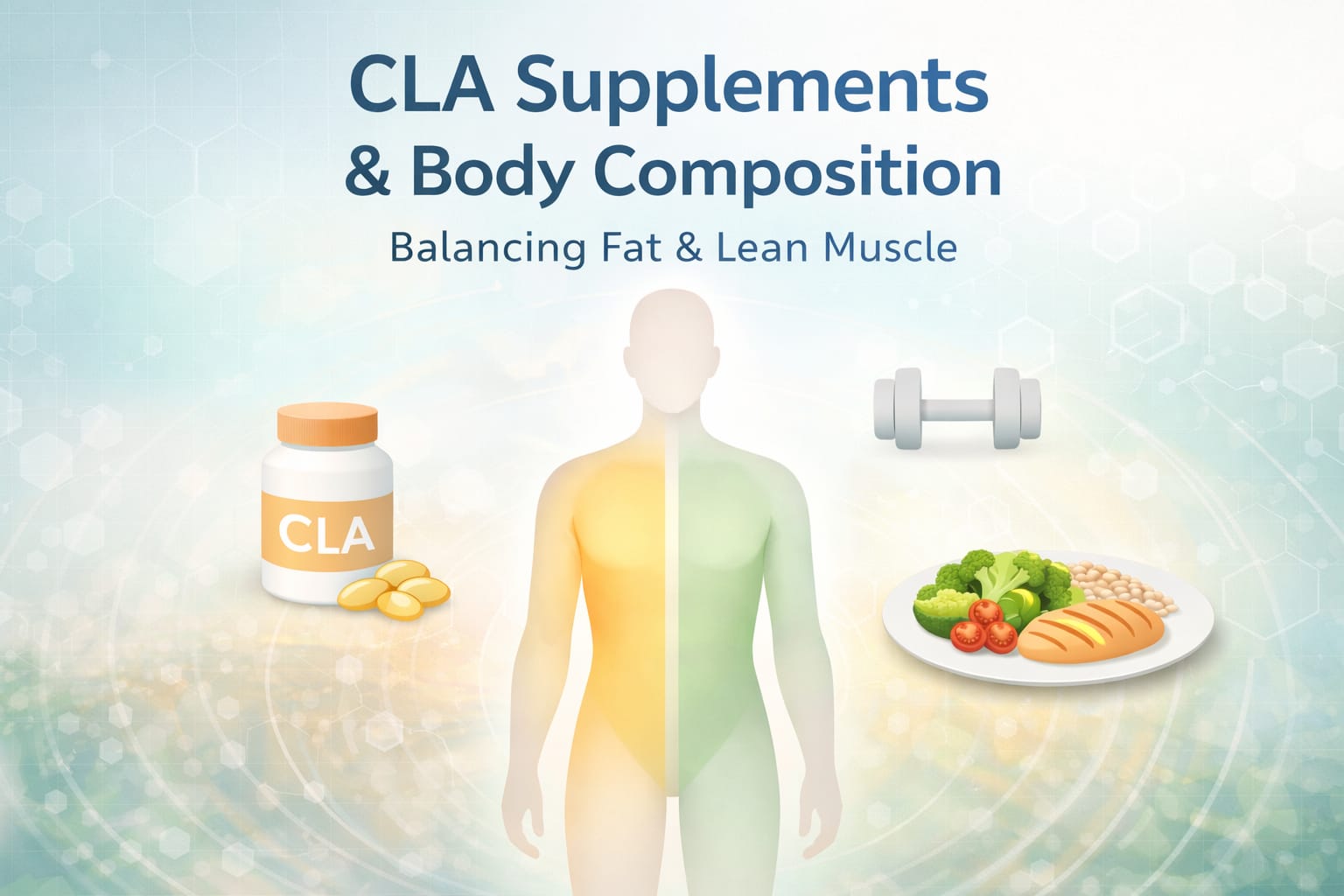
Conjugated linoleic acid (CLA) is often marketed as a fat-burning supplement that claims to reduce body fat without drastic diet changes. However, real-world results are far more nuanced. While some studies suggest modest fat-loss effects, others show little to no benefit. Therefore, understanding how CLA works — and its limitations — is essential before using it.

If you are new to supplements, it’s helpful first to explore a broader overview of options in our Natural Weight Loss Supplements: Beginner’s Guide to understand where CLA fits among other approaches.
What Is CLA?
CLA (conjugated linoleic acid) refers to a group of fatty acids that occur naturally in meat and dairy products from grass-fed animals. Manufacturers usually derive supplement forms from safflower or sunflower oil, which results in higher concentrations than those found in food.
Unlike stimulants, CLA does not directly increase metabolism. Instead, it influences how fat cells store and release energy.
How CLA Is Supposed to Work
Manufacturers usually promote CLA through two main mechanisms:
1. Fat Storage Reduction
CLA may reduce the activity of lipoprotein lipase, an enzyme responsible for storing fat in adipose tissue. As a result, fewer calories may be stored as fat.
2. Fat Oxidation Support
Some studies suggest CLA slightly increases fat oxidation, meaning the body may use fat as energy more efficiently, particularly during rest or light activity.
However, these effects are small and inconsistent, especially without dietary control.
What Science Says About CLA for Weight Loss
Clinical evidence on CLA remains mixed. According to a large meta-analysis published in PubMed, CLA supplementation resulted in a very small reduction in body fat — approximately 0.1–0.2 kg per month, which is unlikely to be noticeable for most people (source).

Additionally, a review available through the National Institutes of Health (NIH) highlights that while CLA may influence fat metabolism, results vary widely depending on dosage, duration, and individual metabolic differences (NIH review). For a detailed, continuously updated summary of all CLA research, see Examine.com’s CLA analysis.
In practice, most users do not experience significant weight loss, especially without dietary changes or physical activity.
Potential Benefits Beyond Weight Loss
Although fat loss is modest, CLA may offer secondary benefits:
- Small improvements in body composition
- Possible preservation of lean muscle mass
- Minor metabolic effects in insulin-resistant individuals
Still, these benefits remain inconsistent across studies.
CLA Dosage and How to Use It
Most studies use:

- 3–6 g per day (like Sports Research CLA 1250mg, one of the top-rated options)
- Split into 2–3 doses
- Taken with meals
Results typically appear after 8–12 weeks, if at all.
Safety and Side Effects
While CLA is generally considered safe for short-term use, scientific reviews warn that higher doses or prolonged supplementation may increase insulin resistance or place stress on the liver in susceptible individuals. This risk profile reinforces why CLA should not be viewed as a harmless or universally safe solution.
Should Avoid CLA:
- People with liver conditions
- Individuals with insulin resistance or type 2 diabetes
- Those expecting fast or dramatic fat loss
Always consult a healthcare provider before long-term use.
Common Myths About CLA
Myth: CLA burns fat quickly
Reality: Fat loss, if any, is gradual and modest.
Myth: CLA works without diet changes
Reality: Calorie control remains essential.
Myth: Natural means risk-free
Reality: Supplements can still cause side effects.
CLA vs. Other Weight Loss Supplements
CLA is just one of many supplements marketed for weight loss. Understanding how it compares helps set realistic expectations.
| Supplement | Mechanism | Evidence Strength | Fat Loss (avg) |
|---|---|---|---|
| CLA | Fat oxidation, fat storage reduction | Moderate (mixed) | 0.1–0.2 kg/month |
| Green Tea Extract | Thermogenesis, caffeine effect | Moderate | 0.2–0.3 kg/month |
| Garcinia Cambogia | HCA appetite suppression | Weak | Minimal |
| Protein Supplements | Satiety, muscle preservation | Strong | Indirect |
| Fiber (Glucomannan) | Appetite reduction | Strong | 0.3–0.4 kg/month |
From a pure evidence standpoint, fiber-based supplements and protein show more consistent results than CLA. However, CLA may still offer value as a supporting supplement when diet and exercise are already in place.
How to Get CLA From Food
Before turning to supplements, it is worth knowing that CLA occurs naturally in everyday foods — particularly from grass-fed animals.
Top Natural Food Sources of CLA
- Grass-fed beef — Contains 2–5 times more CLA than grain-fed beef
- Full-fat dairy — Cheese, butter, and whole milk from grass-fed cows
- Lamb — One of the richest natural sources of CLA
- Plain whole-milk yogurt — Especially from pasture-raised animals
- Eggs from pastured hens — Modest but meaningful CLA content
Typical dietary intake is around 150–200 mg per day, well below the 3–6 grams used in most supplement studies. This gap explains why supplementation is often considered — but also why food-first approaches still make sense for general health.

Choosing a Quality CLA Supplement
If you decide to try CLA after consulting your doctor, knowing what to look for on the label matters.
What to Look For
- 80%+ CLA isomers — Look for products listing c9,t11 and t10,c12 isomers
- Third-party tested — NSF Certified or USP Verified labels signal quality
- Safflower oil base — Most common and well-studied source
- No proprietary blends — You should see exact milligrams per serving
- Clean label — Avoid unnecessary fillers, artificial colors, or additives. Sports Research CLA 1250mg checks all these boxes — non-GMO safflower oil, third-party tested, 180 softgels
Recommended Dosage
Most research studies use 3–6 grams of CLA per day, typically split across two or three doses with meals. Starting at the lower end (3g) for the first four weeks is a sensible approach for new users.
CLA and Exercise: Does It Help More When You Work Out?
One consistent finding across CLA research is that its effects — modest as they are — appear more pronounced in people who combine supplementation with regular exercise. A study published in the Journal of Strength and Conditioning Research found that resistance-training subjects taking CLA showed slightly better lean mass preservation compared to placebo groups.

This does not mean CLA is a performance enhancer. But if you are already training regularly, it may offer a small supportive edge — particularly in preserving muscle while in a calorie deficit.
If exercise-based approaches interest you, explore our guide on Exercise-Based Weight Loss Programs for a deeper look at how movement drives sustainable fat loss.
CLA Before or After Workout?
One of the most common questions about CLA timing is whether to take it before or after exercise. The short answer: it doesn’t matter much — consistency matters more than timing.
That said, there’s a small case for splitting your daily dose around workouts:
- Before workout (1–2 hours): CLA taken with a pre-workout meal may support fat oxidation during exercise, though the effect is modest
- After workout: Taking CLA with your post-workout meal may support lean mass preservation during recovery
- Most practical approach: Split your total daily dose (3–6g) into 2–3 servings with meals, regardless of workout timing
The key takeaway: don’t stress about perfect timing. CLA’s effects accumulate over weeks, not hours. Focus on taking it consistently with meals every day.
Who Should Consider CLA — and Who Should Not
Possibly Suitable For:
- Adults already following a structured diet and exercise routine
- People looking for a minor supporting supplement (not a primary strategy)
- Those who prefer a naturally-derived supplement over stimulants
Not Recommended For:
- People with type 2 diabetes or pre-diabetes (may worsen insulin sensitivity)
- Individuals with liver or gallbladder issues
- Pregnant or breastfeeding women
- Anyone expecting fast or significant fat loss from supplementation alone
Some studies show localized fat reduction in the abdominal area, but results are inconsistent across research. CLA may modestly reduce body fat percentage over 8–12 weeks when combined with exercise and a calorie-controlled diet.
If effective, noticeable changes in body composition typically appear after 8–12 weeks of consistent supplementation at 3–6 grams per day. Individual results vary widely.
No. CLA works — at best — as a minor supportive supplement. Without proper nutrition and regular physical activity, CLA supplementation alone is unlikely to produce meaningful fat loss.
Take CLA with meals, split into 2–3 doses throughout the day. Timing relative to workouts matters less than daily consistency. Most studies use doses with breakfast, lunch, and dinner.
Short-term use (up to 6 months) is generally considered safe for most adults. However, prolonged high-dose supplementation may affect insulin sensitivity or liver markers in susceptible individuals. Always consult your healthcare provider.
Conclusion:
CLA is not a magic fat-burning supplement. Scientific evidence shows that its impact on weight loss is minimal, slow, and highly individual. At best, CLA may provide a small supportive effect when combined with proper nutrition and lifestyle changes.
For sustainable results, focusing on calorie balance, movement, and realistic expectations remains far more effective than relying on any single supplement.