
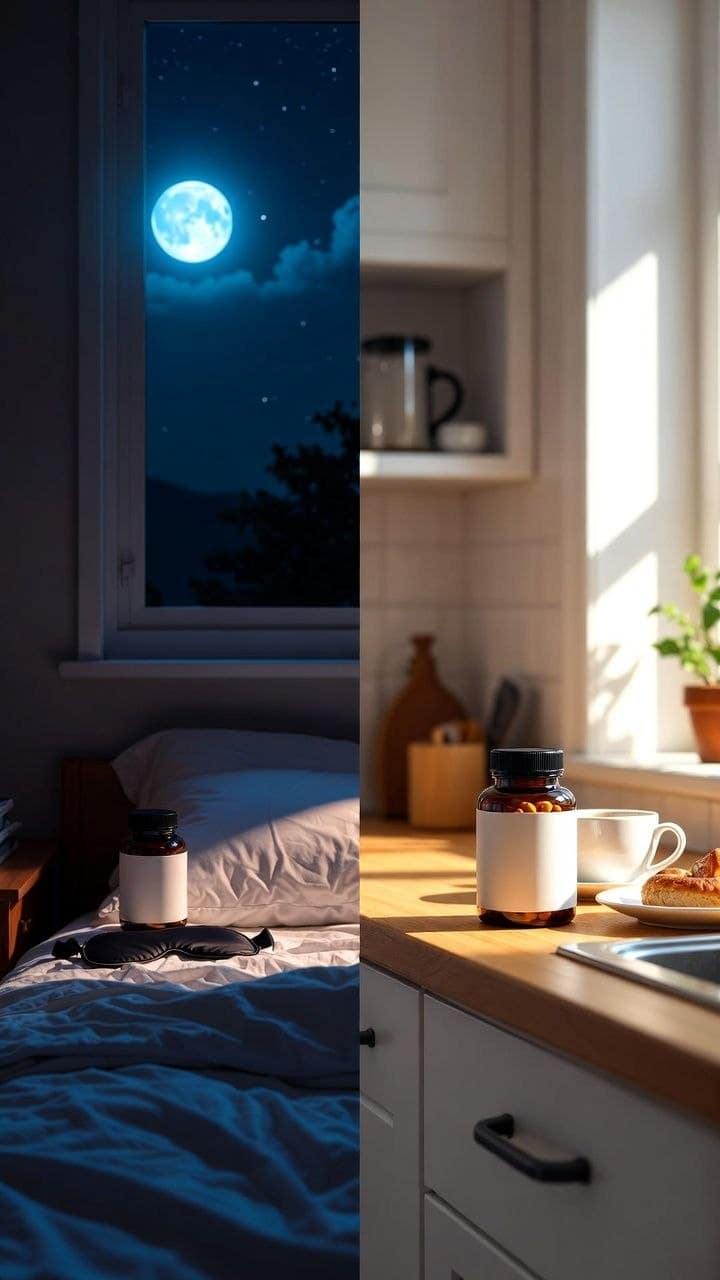
Should you take ashwagandha at night or in the morning? It’s one of the most common questions people ask when starting this powerful adaptogen. The answer depends on why you’re taking it — and getting the timing right can make a real difference in your results.
Quick Answer
Take ashwagandha at night if your primary goal is better sleep, lower cortisol, or stress recovery. Take it in the morning if you want sustained energy, focus, and daytime anxiety relief. For maximum benefits, some people split the dose — morning and evening.
What Does Ashwagandha Actually Do?
Ashwagandha (Withania somnifera) is an adaptogenic herb used in Ayurvedic medicine for over 3,000 years. Modern research confirms it reduces cortisol levels by up to 27.9%, improves sleep quality, lowers anxiety scores, and may enhance physical performance.
Unlike stimulants or sedatives, ashwagandha works by modulating your stress response. It doesn’t force you awake or asleep — it helps your body handle stress more efficiently. That’s exactly why timing matters: the same compound can support different goals depending on when you take it.
Taking Ashwagandha at Night: Who Benefits Most

Nighttime ashwagandha is ideal if you struggle with any of these:
- Difficulty falling asleep — ashwagandha promotes GABA activity, helping quiet a racing mind
- High evening cortisol — if you feel “wired but tired” at bedtime, ashwagandha helps lower that cortisol spike
- Stress recovery — nighttime dosing supports overnight repair and HPA axis recalibration
- Muscle recovery — athletes and gym-goers benefit from nighttime ashwagandha’s effect on testosterone and growth hormone during sleep
The Science Behind Nighttime Dosing
A 2019 study published in Cureus found that 300mg of ashwagandha root extract twice daily significantly improved sleep quality scores. Participants taking the extract before bed reported falling asleep faster and feeling more refreshed upon waking (PubMed).
Another study in the Journal of Ethnopharmacology showed that ashwagandha’s active compound withaferin A enhances GABAergic signaling — the same pathway targeted by prescription sleep medications, but without the dependency risk (PubMed).
Best Nighttime Dosage
For sleep and recovery, take 300–600mg of KSM-66 or Sensoril extract about 30–60 minutes before bed. A solid option is Jarrow Formulas KSM-66 Ashwagandha — one of the most clinically studied extracts available. Start with the lower dose and increase after one week if needed. Take it with a small snack containing fat (like a few almonds) to improve absorption.
Taking Ashwagandha in the Morning: Who Benefits Most

Morning ashwagandha makes more sense if your goals include:
- Daytime anxiety relief — ashwagandha blunts the cortisol response to daily stressors
- Sustained focus and energy — by reducing mental fatigue without stimulation
- Workout performance — morning dosing can improve VO2 max and strength when taken pre-workout
- Thyroid support — ashwagandha may gently boost T3/T4 levels, best utilized during active hours
The Science Behind Morning Dosing
A 2012 study in the Indian Journal of Psychological Medicine demonstrated that ashwagandha taken during the day reduced serum cortisol by 27.9% and significantly lowered scores on all stress-assessment scales. Participants reported feeling calmer and more focused throughout the day (PubMed).
For physical performance, a study in the Journal of the International Society of Sports Nutrition found that 600mg daily improved cardiorespiratory endurance and recovery in athletes when taken in the morning (PubMed).
Best Morning Dosage
Take 300–600mg with breakfast. The food helps absorption and prevents the mild stomach upset some people experience on an empty stomach. KSM-66 is generally preferred for daytime use because it’s a root-only extract with a stronger evidence base for cognitive benefits. Jarrow’s KSM-66 formula is a reliable choice at 300mg per capsule.
Ashwagandha at Night vs Morning: Side-by-Side Comparison
| Factor | Night | Morning |
|---|---|---|
| Best for | Sleep, recovery, cortisol | Focus, energy, performance |
| Dosage | 300–600mg before bed | 300–600mg with breakfast |
| Take with | Small fatty snack | Breakfast |
| Extract type | KSM-66 or Sensoril | KSM-66 preferred |
| Effects felt | 1–2 weeks | 1–2 weeks |
| Side effects | Vivid dreams (rare) | Mild drowsiness (rare) |
Can You Split the Dose? Morning and Night?
Yes — and many practitioners recommend it. Splitting 600mg into 300mg morning + 300mg evening gives you round-the-clock cortisol management. This approach works especially well for people dealing with chronic stress, adrenal fatigue, or both sleep and daytime anxiety issues.
Most clinical studies actually used twice-daily dosing, so the evidence base is strong for this approach. The key is consistency — ashwagandha is not a one-time fix. It builds up in your system over 2–4 weeks before you feel the full effects.
When NOT to Take Ashwagandha
Regardless of timing, ashwagandha is not recommended for:
- Pregnant or breastfeeding women — insufficient safety data
- People with hyperthyroidism — it may increase thyroid hormone levels
- Those on immunosuppressants — ashwagandha stimulates the immune system
- People taking sedatives or benzodiazepines — potential additive effects at night
- Before surgery — stop 2 weeks prior due to effects on blood pressure and sedation
Always consult your healthcare provider before starting ashwagandha, especially if you take thyroid medication, blood pressure drugs, or diabetes medication.
KSM-66 vs Sensoril: Which Extract to Choose
Not all ashwagandha is created equal. The two most researched extracts are:
KSM-66 — Full-spectrum root extract. More clinical studies, better for energy, cognition, and physical performance. Generally the best choice for morning use.
Sensoril Ashwagandha — Root and leaf extract with higher withanolide content. Slightly more sedating, making it a good match for nighttime use and cortisol reduction.
If you’re splitting doses, you could even use KSM-66 in the morning and Sensoril at night — though most people do fine with one extract for both doses.
How Long Until Ashwagandha Works?
Ashwagandha is not instant. Here’s a realistic timeline:
- Days 1–3: Most people feel nothing. Some notice slight relaxation
- Week 1–2: Subtle improvements in sleep quality or stress tolerance
- Week 3–4: Noticeable reduction in anxiety, better sleep, improved focus
- Week 6–8: Full effects — measurable cortisol reduction, physical performance gains
Give it at least 4 weeks before deciding if it works for you. Cycling (8 weeks on, 2 weeks off) is recommended to maintain sensitivity.
Who Should Take Ashwagandha at Night
Choose nighttime if you identify with any of these profiles:
- You lie awake replaying the day or worrying about tomorrow
- You wake up at 3am and can’t fall back asleep
- Your cortisol test shows elevated evening levels
- You train hard and want better overnight recovery
- You already have good daytime energy but can’t “switch off”
Who Should Take Ashwagandha in the Morning
Choose morning if this sounds like you:
- You feel anxious or overwhelmed during work hours
- You want calm, sustained focus without caffeine jitters
- You’re an athlete or gym-goer looking for performance gains
- You suspect low thyroid function (with doctor’s guidance)
- You already sleep fine but struggle with daytime stress
FAQ
Can ashwagandha make you drowsy during the day?
Rarely at standard doses (300–600mg). If you experience daytime drowsiness, try shifting your dose to the evening or reducing it. Sensoril extract is slightly more sedating than KSM-66.
Is it safe to take ashwagandha every day?
Yes, for most adults. Clinical studies have used daily doses for up to 12 weeks safely. However, cycling (8 weeks on, 2 weeks off) helps maintain your body’s responsiveness.
Can I take ashwagandha with melatonin at night?
Yes, but start with low doses of each. Both promote sleep through different mechanisms — melatonin signals sleep onset while ashwagandha reduces cortisol. Together they can be effective, but monitor for excessive drowsiness.
Does ashwagandha interact with coffee?
No direct interaction. In fact, ashwagandha can complement caffeine by reducing the jittery, anxious side effects while maintaining alertness. Taking them together in the morning is a popular “calm energy” stack.
Bottom Line
Ashwagandha timing isn’t one-size-fits-all. Night dosing is better for sleep, cortisol, and recovery. Morning dosing wins for focus, energy, and performance. Split dosing covers both bases. Choose based on your primary goal, stay consistent for 4+ weeks, and you’ll know exactly which timing works for your body.
Related Articles
- Ashwagandha for Stress Relief and Mental Clarity
- Rhodiola Rosea vs Ashwagandha: The Complete Comparison
- Best Adaptogenic Herbs for Stress Relief
- Magnesium for Better Sleep: Types, Benefits and How to Use It