
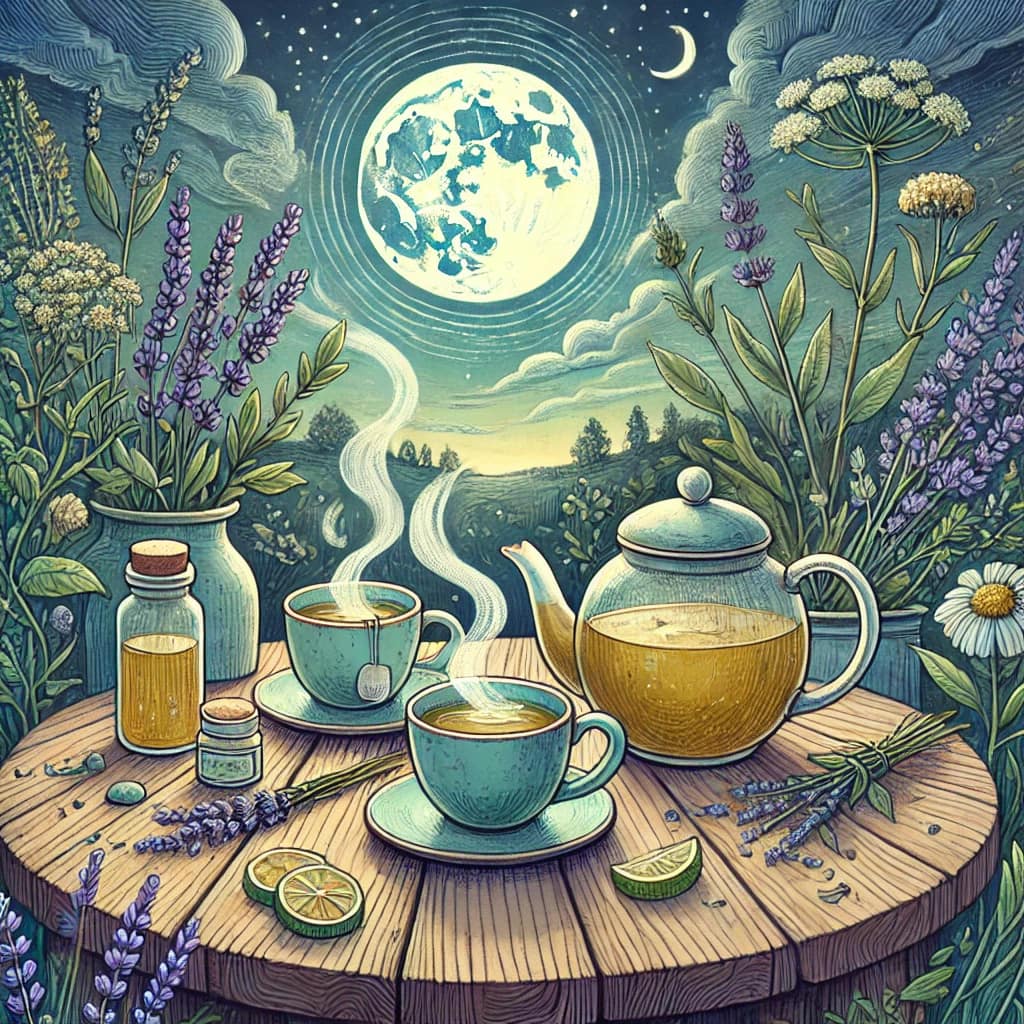
There’s a reason the ritual of a warm cup of tea before bed has persisted across cultures for thousands of years — it works. Beyond the psychological comfort of a soothing nighttime routine, certain herbs contain specific bioactive compounds that interact directly with your brain’s sleep and relaxation systems. Here’s a comprehensive guide to the best herbal teas for sleep, how they work, and how to use them most effectively.
Why Herbal Teas for Sleep Actually Work
Sleep problems are often driven by an overactive nervous system — elevated cortisol, racing thoughts, muscle tension, or an inability to transition from the day’s alertness to the quiet required for sleep. The most effective sleep herbs work by targeting GABA receptors (your brain’s primary calming system), reducing cortisol, or gently promoting melatonin production — all without the dependency or next-morning grogginess of pharmaceutical sleep aids.
The warm liquid itself also plays a role: warming the body slightly then allowing it to cool mimics the natural temperature drop that precedes sleep, and the act of making and holding a warm cup activates the parasympathetic nervous system through sensory ritual.
1. Chamomile Tea — The Gold Standard
Chamomile is the world’s most widely used medicinal herb and the most thoroughly researched for sleep. Its primary active compound, apigenin, is a flavonoid that binds to benzodiazepine receptors in the brain — the same receptors targeted by prescription sleep medications like Valium, but with a much gentler, non-habit-forming action. Think of it as a natural, mild “brain calm.”
Clinical evidence: A 2017 double-blind randomized controlled trial published in Phytomedicine found that participants with chronic insomnia who took chamomile extract for 28 days fell asleep significantly faster and woke less during the night compared to placebo. A 2011 study specifically in new mothers — a notoriously sleep-disrupted population — found chamomile tea consumption over 2 weeks significantly improved sleep quality and reduced symptoms of depression.
How to brew it for maximum effect: Use 2–3 teaspoons of dried chamomile flowers (or 2 tea bags) in just-boiled water. Cover while steeping for 5–10 minutes to prevent volatile oils from evaporating. Drink 30–45 minutes before bed. A small amount of raw honey doesn’t hurt — it mildly raises insulin and helps tryptophan cross the blood-brain barrier to produce serotonin.
2. Valerian Root Tea — Deep Relaxation
Valerian (Valeriana officinalis) has been prescribed as a sleep remedy since ancient Greece — Hippocrates documented its properties, and it remained in the official pharmacopoeias of most European countries well into the 20th century. Its mechanism is now well understood: valerenic acid and other compounds in valerian inhibit the enzyme GABA transaminase, which breaks down GABA in the brain. The result is prolonged inhibitory (calming) neural signaling.
A systematic review and meta-analysis of 16 clinical trials found valerian improved subjective sleep quality in the majority of studies without significant side effects. It’s particularly effective for anxiety-driven insomnia — the type where the mind refuses to quiet down at night.
Important note: Valerian is a slow builder — give it 2–4 weeks of consistent nightly use before evaluating effectiveness. First-night results are often subtle. Also be warned: the tea has a strong, earthy smell that some people find off-putting. Capsules are a good alternative for those sensitive to the taste.
Brew: 1 teaspoon dried root in hot water, steep covered for 10–15 minutes. Drink 30–60 minutes before bed.
3. Lavender Tea — Calm Mind, Calm Body
Lavender is most famous as an aromatherapy tool, but drinking lavender tea also delivers measurable calming effects. Its primary compound, linalool, has been shown to reduce anxiety and promote relaxation through modulation of GABA pathways. A German pharmaceutical company developed a standardized oral lavender oil preparation (Silexan) specifically for anxiety — multiple clinical trials found it significantly reduced anxiety scores comparable to lorazepam (a prescription benzodiazepine) without sedation or dependency.
For sleep, lavender is particularly effective when the problem is anxiety-driven rather than purely physiological. It reduces the cognitive hyperarousal — the anxious thought loops — that many insomniacs experience at bedtime.
Dual approach: Drink lavender tea (1 teaspoon dried lavender in hot water, 5 min steep) AND diffuse lavender essential oil in the bedroom simultaneously for a synergistic effect. The combination of internal and aromatherapy routes is particularly powerful.
4. Passionflower Tea — The Anxiety Specialist
Passionflower (Passiflora incarnata) is one of the most underrated sleep herbs in Western natural medicine. Indigenous Americans used it for centuries for anxiety and insomnia; modern research has revealed its mechanism: passionflower increases GABA levels in the brain through multiple pathways, producing anxiolytic (anti-anxiety) and sedative effects without CNS depression.
A well-designed 2011 crossover study compared passionflower tea to placebo over two weeks in healthy adults. Participants rated their sleep quality significantly higher during the passionflower condition, with particular improvements in sleep continuity and morning alertness. A separate clinical trial found passionflower extract was as effective as low-dose oxazepam (a prescription benzodiazepine) for generalized anxiety — an impressive benchmark for a plant-based remedy.
Brew: 1–2 teaspoons dried passionflower herb in hot water, steep 10 minutes covered. Drink 1 hour before bed. Can be combined with chamomile for a more comprehensive calming effect.
5. Lemon Balm Tea — Calm Without Sedation
Lemon balm (Melissa officinalis) is a gentle member of the mint family with a pleasant, slightly citrusy flavour. It works primarily by inhibiting the enzyme that breaks down GABA (GABA transaminase) — similar mechanism to valerian but much more subtle. This makes it ideal for people who find chamomile or valerian too strong, or who want a mild daily wind-down tea rather than specifically targeting insomnia.
Research shows lemon balm reduces anxiety and improves mood in healthy volunteers after single doses, and significantly reduces stress and insomnia scores in people with mild-to-moderate anxiety disorders over 15 days. It pairs beautifully with valerian — the combination is the subject of multiple positive clinical trials for insomnia, with results superior to either herb alone.
Brew: 2 teaspoons fresh or 1 teaspoon dried herb in hot water, steep 5 minutes. A classic evening blend: equal parts lemon balm + chamomile + passionflower.
The Best Sleep Tea Blends
| Goal | Blend |
|---|---|
| General sleep support | Chamomile + Lemon Balm |
| Anxiety-driven insomnia | Passionflower + Lavender + Chamomile |
| Deep, sustained sleep | Valerian + Lemon Balm |
| Stress + racing mind | Ashwagandha (warm milk) + Chamomile |
| Gentle daily wind-down | Lemon Balm + Chamomile + small honey |
Tips for Getting the Most From Your Sleep Tea
- Brew covered — the volatile oils that carry most of the active compounds evaporate quickly if uncovered. Always cover your cup or teapot while steeping.
- Steep long enough — medicinal herbs need 5–10 minutes minimum, not the 2 minutes most people give a regular tea bag.
- Make it a ritual — the act of intentionally preparing and drinking your tea is itself a powerful wind-down signal to your nervous system. Put the phone away, sit quietly.
- Consistency beats intensity — these herbs build their effects over 2–4 weeks of nightly use. Don’t judge by the first cup.
- Timing matters — drink your tea 30–60 minutes before your target sleep time, not right before you get into bed.
Conclusion
Herbal teas offer one of the most accessible and pleasant paths to better sleep — combining the bioactive power of medicinal plants with the psychological benefit of a calming nighttime ritual. Chamomile, valerian, lavender, passionflower, and lemon balm each work through slightly different mechanisms, making them complementary and stackable.
Start with chamomile if you’re new to sleep herbs — it’s the gentlest and most thoroughly researched. Add passionflower or valerian if you need more support. Give any new herb 2–4 weeks of consistent nightly use before drawing conclusions. And remember: the tea is just one tool in a larger sleep hygiene picture — consistent sleep schedules, darkness, and a cool bedroom remain the foundation everything else builds on.
More sleep support: Natural Remedies for Insomnia and Magnesium for Better Sleep.