
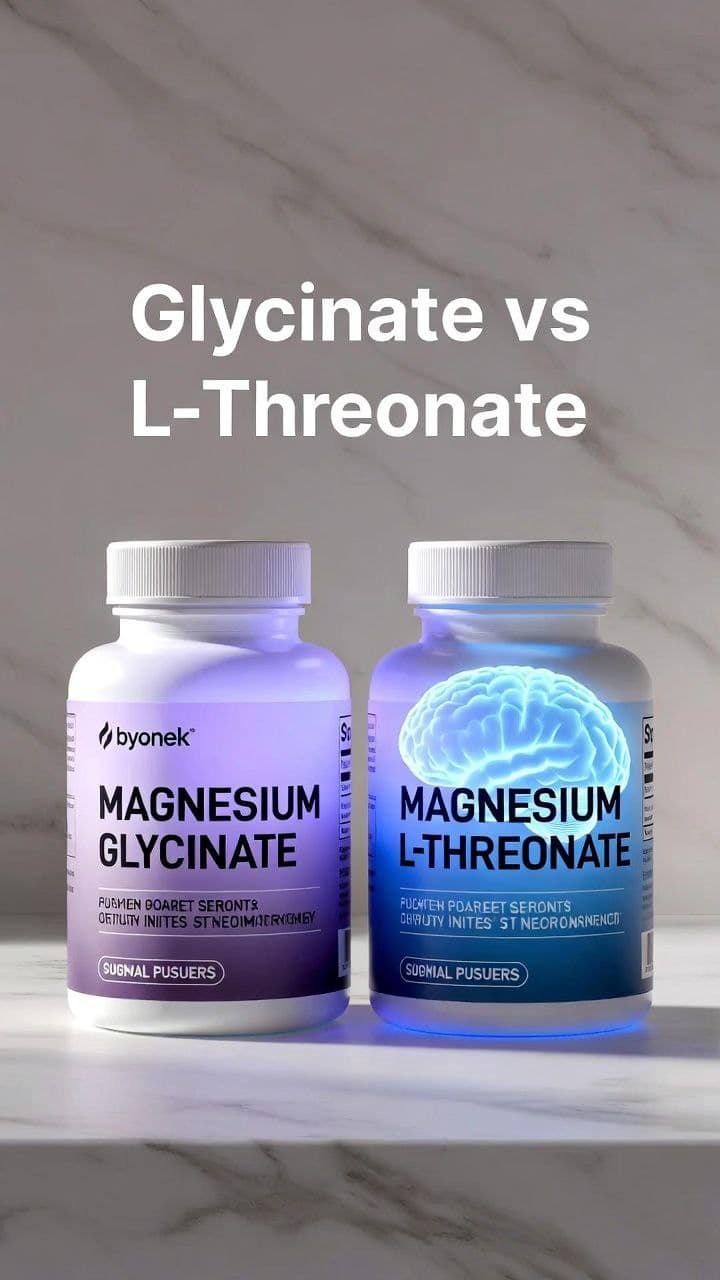
If you’re choosing between magnesium glycinate vs L-Threonate, you’re not alone — these are two of the most popular forms of magnesium, each targeting completely different goals. This guide breaks down exactly how they differ, what the science says, and which one (or both) belongs in your supplement stack.
⚡ Quick Answer
Magnesium Glycinate → best for sleep, anxiety, muscle relaxation.
Magnesium L-Threonate → best for memory, focus, brain health.
Many people take both: L-Threonate in the morning, Glycinate before bed.
What Is Magnesium Glycinate?
Magnesium glycinate is magnesium bound to glycine, an amino acid found naturally in protein-rich foods. This chelated form makes it significantly more bioavailable than non-chelated forms like magnesium oxide, which is poorly absorbed and mostly used as a laxative.
The chelation isn’t just for absorption. Glycine itself is a calming, inhibitory neurotransmitter precursor with its own sleep-promoting and anxiolytic properties. When you take magnesium glycinate, you get a synergistic combination: magnesium’s muscle-relaxing, nervous-system-calming effects combined with glycine’s independent ability to lower core body temperature and promote sleep onset.
- Form: Magnesium bound to glycine (amino acid) — chelated
- Bioavailability: Very high — one of the best-absorbed forms available
- Best known for: Sleep quality, anxiety reduction, muscle relaxation, PMS relief
- Synergistic effect: Glycine independently activates NMDA glycine receptors, amplifying the calming effects
- Typical dose: 200–400mg elemental magnesium taken 30–60 minutes before bed
Magnesium glycinate is also gentle on the digestive system — a common complaint with cheaper forms. People who have tried magnesium citrate or oxide and experienced loose stools often find glycinate much better tolerated.

What Is Magnesium L-Threonate?
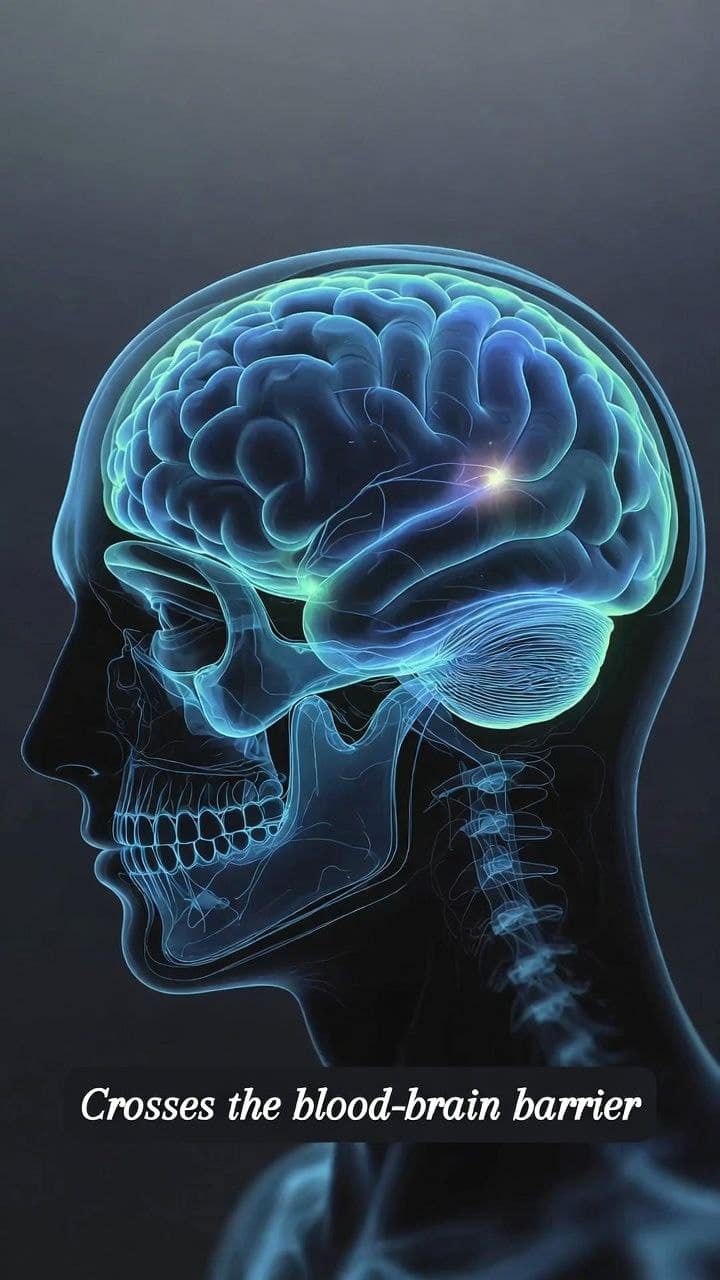
Magnesium L-Threonate is a newer, patented form developed by researchers at MIT, with findings published in the journal Neuron in 2010. The key innovation: binding magnesium to L-threonic acid (a metabolite derived from Vitamin C) creates a molecule with exceptional ability to cross the blood-brain barrier — a selective membrane that blocks most substances from entering the brain.
Standard magnesium forms struggle to raise brain magnesium levels significantly. L-Threonate changes that. In animal studies, it increased brain magnesium levels by around 15% more than other forms — a seemingly small number that translated to measurable improvements in synaptic density, working memory, and long-term memory. Human clinical trials have since confirmed cognitive benefits, particularly in older adults.
- Form: Magnesium bound to L-threonic acid (Vitamin C metabolite)
- Unique property: Crosses the blood-brain barrier efficiently — designed specifically for brain uptake
- Origin: Developed by MIT researchers, published in Neuron (2010)
- Best known for: Memory enhancement, cognitive function, brain plasticity, focus
- Typical dose: 1,500–2,000mg total (provides approximately 144mg elemental magnesium)
- Brand name: Magtein (the patented form used in most supplements)
The large-seeming dose (1,500–2,000mg) is somewhat misleading. Because the L-threonate molecule is heavy relative to the magnesium ion, the actual elemental magnesium delivered is modest — around 144mg. You’re paying a premium for the delivery system, not the raw magnesium content.
Key Differences at a Glance
Here’s a side-by-side comparison of the two forms across the factors that matter most to buyers:
| Feature | Magnesium Glycinate | Magnesium L-Threonate |
|---|---|---|
| Best for | Sleep, anxiety, muscle relaxation | Memory, cognition, focus |
| Bioavailability | Very high | High (brain-specific) |
| Crosses blood-brain barrier | Partially | Yes (optimized) |
| Cost per serving | $ (affordable) | $$$ (premium) |
| Typical dose | 200–400mg elemental Mg | 1,500–2,000mg total |
| When to take | Evening / before bed | Morning or split doses |
| Research depth | Extensive (decades) | Growing (very promising) |
The science: A 2012 study published in Neuron found that Magnesium L-Threonate significantly increased synaptic density and improved cognitive function in aging rats. For glycinate, a 2020 review in Nutrients confirmed its superior absorption and calming effects via glycine receptors.
Which One Is Better for Sleep?
Magnesium Glycinate wins for sleep — and it’s not particularly close. Multiple randomized controlled trials have demonstrated that magnesium supplementation improves sleep quality, reduces nighttime waking, and increases sleep efficiency.
Why Glycinate Works So Well for Sleep
The glycinate form amplifies sleep effects through glycine’s independent mechanism: glycine activates receptors that reduce core body temperature, which is one of the key physiological signals for sleep onset. A 2012 study found that magnesium supplementation improved insomnia index scores, sleep efficiency, and reduced early morning awakening in elderly participants. A separate study in Sleep and Biological Rhythms showed that 3g of glycine before bed improved sleep quality and reduced daytime sleepiness.
Magnesium L-Threonate can improve sleep indirectly — less anxiety generally means better sleep — but it’s not optimized for that purpose, and you’d be overpaying if sleep is your primary goal.
Which One Is Better for Brain and Memory?
Magnesium L-Threonate wins for cognitive function, and the evidence is genuinely compelling. The original MIT study (Slutsky et al., 2010) showed that elevating brain magnesium levels via L-threonate increased synaptic density in the prefrontal cortex and hippocampus — two regions critical for memory storage and executive function.
What the Clinical Trials Show
A 2016 randomized, double-blind, placebo-controlled study in The Journal of Alzheimer’s Disease found that Magtein supplementation over 12 weeks significantly improved overall cognitive ability in adults aged 50–70, with brain age improving by an average of 9 years on standardized assessments. More recent studies have shown improvements in working memory, attention, and executive function.
L-Threonate is also showing early promise as a preventive intervention for age-related cognitive decline. Glycinate, while excellent for general magnesium repletion, doesn’t raise brain magnesium concentrations efficiently enough to produce significant cognitive effects.
Can You Take Both Together?
Yes — and many people who take their supplementation seriously do exactly that. Glycinate and L-Threonate are not competing products; they target different tissues and different goals. The combination approach is popular in biohacking communities precisely because it covers the full spectrum: brain performance during the day, deeper recovery at night.
- Morning: Magnesium L-Threonate (cognitive support, focus, memory throughout the day)
- Evening: Magnesium Glycinate (muscle relaxation, anxiety reduction, sleep preparation)
There are no known negative interactions between the two forms. The main consideration is budget: L-Threonate runs 3–5x the cost of glycinate per serving. If cost is a constraint, prioritize based on your primary concern and add the second form later.
Dosage Guide
- Magnesium Glycinate: 200–400mg elemental magnesium per day. Take 30–60 minutes before bed. Start at 200mg and increase if needed.
- Magnesium L-Threonate: 1,500–2,000mg of the compound (~144mg elemental Mg). Take in the morning or split into morning and midday doses. Avoid late-evening dosing — some users report increased alertness.
- Upper limit: The tolerable upper intake level (UL) for supplemental magnesium is 350mg elemental per day. If stacking both forms, track your total elemental magnesium intake to stay within safe limits.
Who Should Choose Which?
Choose Magnesium Glycinate if:
- Sleep quality is your main concern
- You experience anxiety or chronic stress
- You have muscle cramps, tension headaches, or restless legs
- You’re budget-conscious and want the best general-purpose magnesium
Choose Magnesium L-Threonate if:
- Cognitive performance, memory, or focus is your primary goal
- You’re over 40 and concerned about age-related cognitive decline
- You’re a student, knowledge worker, or anyone whose livelihood depends on mental sharpness
- You’re willing to invest more in a research-backed, brain-targeted form
✅ Recommended: Doctor’s Best Magnesium Glycinate, 240ct
Chelated form (100% glycinate), 4.7★ with 80k+ verified reviews. No fillers, highly absorbable — the #1 pick for sleep and muscle relaxation.
Check Price on Amazon →As an Amazon Associate, piewell.com earns from qualifying purchases.
Side Effects and Safety
- Magnesium Glycinate: Rarely causes digestive issues. Very occasional mild nausea if taken on an empty stomach — easily avoided by taking with food.
- Magnesium L-Threonate: A small percentage of users report mild headaches during the first week. This typically resolves on its own — start with a lower dose and titrate up over 1–2 weeks.
- Both forms: People with kidney disease should consult a doctor before supplementing, as impaired kidneys may not excrete excess magnesium efficiently.
The Bottom Line
Magnesium Glycinate and Magnesium L-Threonate are not competing products — they’re specialized tools for different jobs. Glycinate is the better choice for sleep, anxiety, and whole-body magnesium repletion: affordable, extensively researched, exceptionally well-tolerated. L-Threonate is the better choice for cognition: memory, focus, brain plasticity, and long-term neuroprotection — no other form reliably raises brain magnesium levels the way it does.
If you’re only going to take one, match it to your primary concern. If you can afford both, the morning L-Threonate and evening Glycinate stack is one of the more evidence-backed supplement combinations you can build — addressing brain performance and recovery in a single clean protocol.
Related Articles
→ Magnesium for Better Sleep: Complete Guide
→ Top 5 Nootropics for Brain Power