
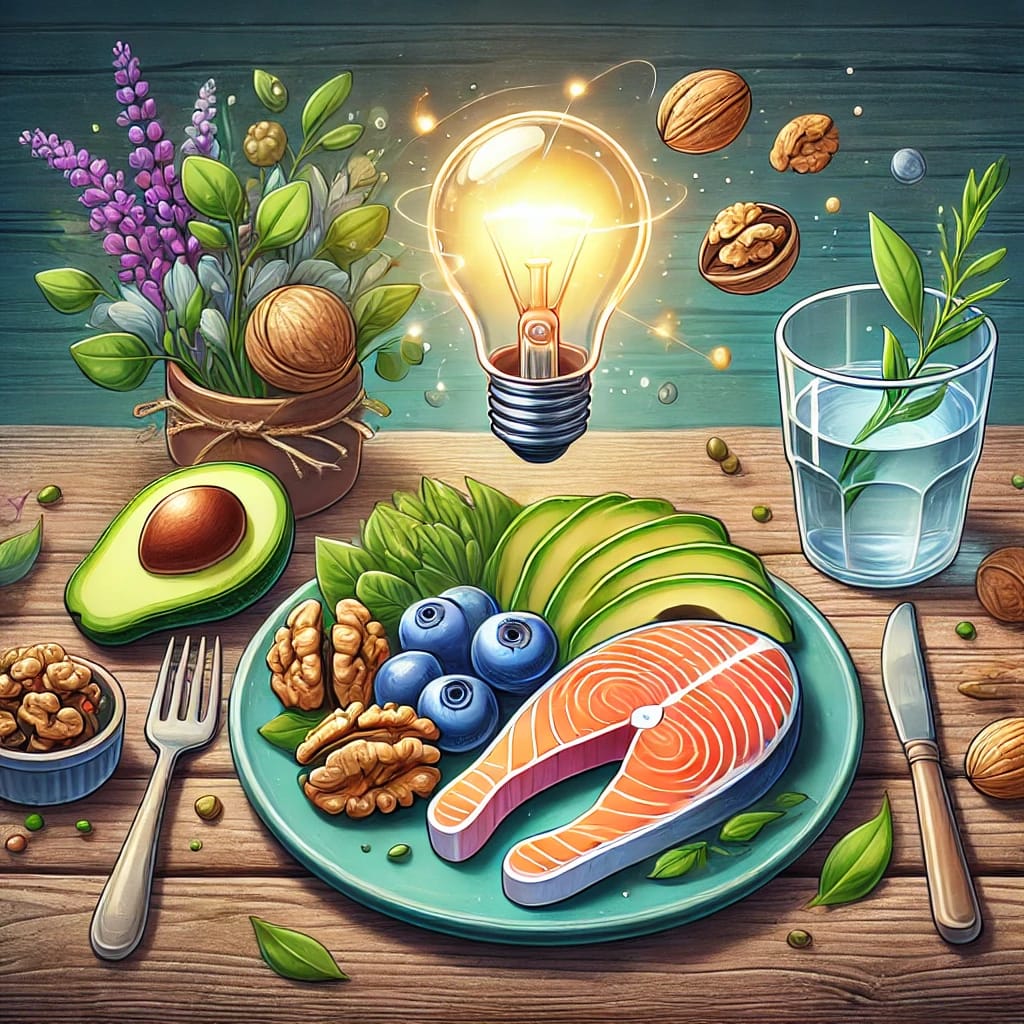
What you eat directly shapes how well your brain performs. The brain consumes about 20% of your total energy and is exquisitely sensitive to nutrient availability — the right foods sharpen memory, accelerate thinking, and protect against cognitive decline, while the wrong ones cloud focus and accelerate aging. Here are the most powerful, research-backed foods for memory and mental performance.
Why Food Matters for Brain Function
Your neurons communicate through neurotransmitters — chemical messengers built directly from the amino acids, vitamins, and minerals in your food. Acetylcholine (memory and learning) requires choline. Serotonin (mood and focus) requires tryptophan and B6. Dopamine (motivation) requires tyrosine and iron. When these building blocks are scarce, cognitive performance suffers regardless of how motivated or rested you are.
Beyond neurotransmitters, brain function depends on cerebral blood flow, mitochondrial energy production, and protection from neuroinflammation — all of which are powerfully influenced by diet. The research is clear: a brain-supporting diet produces measurable improvements in memory, focus, processing speed, and long-term cognitive resilience.
1. Fatty Fish (Salmon, Sardines, Mackerel)
Fatty fish is arguably the single most important food category for brain health. The brain is approximately 60% fat, and DHA (docosahexaenoic acid) — an omega-3 fatty acid found abundantly in fatty fish — is its primary structural component. DHA forms the fluid membranes of neurons, directly affecting how efficiently they transmit signals.
Higher DHA intake is consistently associated with better memory, faster processing speed, and reduced risk of Alzheimer’s disease. A 2012 study found that supplementing with DHA improved working memory in healthy young adults. EPA (the other key omega-3 in fatty fish) reduces neuroinflammation, which is increasingly recognized as a driver of depression, brain fog, and cognitive decline.
Practical tip: Aim for 2–3 servings of fatty fish per week. Sardines and mackerel are particularly cost-effective and lower in mercury than larger fish. If you don’t eat fish, algae-based omega-3 supplements provide DHA and EPA directly from the source that fish themselves eat.
2. Blueberries
Blueberries are sometimes called “brain berries” — and the nickname is earned. Their deep blue color comes from anthocyanins, flavonoid compounds with potent antioxidant and anti-inflammatory properties that readily cross the blood-brain barrier.
Research from the USDA Human Nutrition Research Center on Aging at Tufts University found that rats fed blueberry extract reversed age-related memory deficits and improved balance and coordination. Human studies confirm the findings: a 2010 study found that older adults with mild cognitive impairment who drank blueberry juice daily for 12 weeks showed significantly improved learning, word memory, and reduced depressive symptoms compared to placebo. Anthocyanins increase BDNF (brain-derived neurotrophic factor), the brain’s growth hormone for neurons, supporting the formation of new memory connections.
Practical tip: A cup of blueberries daily — fresh or frozen — provides a meaningful dose of anthocyanins. Frozen blueberries retain most of their antioxidant content and are available year-round at lower cost.
3. Eggs
Eggs are one of the richest sources of choline — a nutrient most people don’t get enough of. Choline is the direct precursor to acetylcholine, the neurotransmitter most central to memory, learning, and attention. Adequate choline intake supports the formation of new memories and has been associated with better cognitive performance in multiple population studies.
Egg yolks also contain lutein and zeaxanthin — carotenoids now recognized not just for eye health but for cognitive performance. A 2017 study in Nutrients found higher serum lutein was associated with better processing speed, visual attention, and complex cognitive function in adults of all ages.
Additionally, eggs provide B12 and folate — B vitamins that regulate homocysteine levels. Elevated homocysteine is an independent risk factor for brain atrophy and cognitive decline; B12 and folate bring it down.
Practical tip: 2–3 whole eggs daily (not just whites — the choline is almost entirely in the yolk). Pan-fried in olive oil, poached, or boiled — minimal processing preserves the most nutrients.
4. Dark Chocolate (70%+ Cacao)
High-cacao dark chocolate is one of the most enjoyable ways to support brain function. Its flavanols — particularly epicatechin — increase cerebral blood flow, improve neurovascular coupling (the mechanism linking neural activity to blood supply), and stimulate BDNF production. Cacao also contains theobromine and small amounts of caffeine, which together provide gentle, sustained mental stimulation without the sharp spikes of coffee.
A 2018 study using fMRI imaging found that consuming high-flavanol dark chocolate acutely improved blood flow to the brain and cognitive performance on memory tasks. Longer-term studies show regular dark chocolate consumption is associated with better executive function and verbal memory in older adults.
Practical tip: 1–2 squares of 70–85% dark chocolate daily. The higher the cacao percentage, the more flavanols and the less sugar. Avoid “dutched” or alkalized cocoa as the process destroys most flavanols.
5. Leafy Greens (Spinach, Kale, Arugula)
A landmark study from Rush University Medical Center tracked the eating habits of nearly 1,000 older adults over 5 years. Those who ate the most leafy greens (averaging about 1.3 servings daily) had the cognitive equivalent of being 11 years younger than those who ate the fewest. The nutrients driving this effect include vitamin K1 (which converts to K2 in the gut and supports brain cell survival), folate, lutein, and alpha-linolenic acid (a plant omega-3).
Vitamin K is particularly notable — it activates proteins that prevent neuronal apoptosis (cell death) and supports the synthesis of sphingolipids, fats found abundantly in brain cell membranes that decline with age.
Practical tip: Aim for 1–2 cups of leafy greens daily. A simple salad with arugula and spinach, wilted greens with garlic, or a handful in a morning smoothie all count. Vitamin K is fat-soluble — eat greens with olive oil or avocado for better absorption.
6. Walnuts
Walnuts are almost suspiciously shaped like a brain — and their cognitive benefits are just as fitting. They’re one of the best plant sources of ALA (alpha-linolenic acid, a plant omega-3), as well as vitamin E, polyphenols, and folate — all important for brain health. The unique polyphenols in walnuts have direct anti-neuroinflammatory effects and have been shown to improve signaling between neurons.
A large epidemiological study found that adults who consumed walnuts regularly scored significantly higher on cognitive tests including memory, concentration, and information processing speed. A clinical trial at UCLA found that walnut consumption improved memory and brain processing in college-aged students.
Practical tip: A small handful of walnuts (about 28g / 1 oz) daily provides approximately 2.5g of ALA omega-3s and meaningful amounts of vitamin E. Eat them raw — heat damages their delicate polyunsaturated fats.
7. Turmeric
Turmeric’s active compound curcumin crosses the blood-brain barrier and has two key cognitive benefits: it increases BDNF (supporting neuroplasticity and memory formation) and reduces neuroinflammation by blocking the NF-kB inflammatory pathway. Neuroinflammation is increasingly implicated in depression, brain fog, and Alzheimer’s disease.
A 2018 randomized controlled trial in The American Journal of Geriatric Psychiatry found that older adults taking a bioavailable curcumin supplement twice daily for 18 months showed significantly improved memory and attention compared to placebo — and brain scans revealed reduced amyloid and tau protein accumulation in regions relevant to mood and memory.
Practical tip: Add turmeric liberally to cooking with black pepper (piperine boosts absorption 2,000%) and a fat source. For therapeutic cognitive benefits, a standardized supplement (500mg curcumin with piperine) is more reliable than culinary amounts alone.
Brain Food Daily Plan
| Meal | Brain Foods to Include |
|---|---|
| Breakfast | 2–3 eggs + handful blueberries + green tea |
| Lunch | Leafy green salad with olive oil + salmon or sardines |
| Snack | Walnuts + 1–2 squares dark chocolate |
| Dinner | Turmeric-spiced dish with black pepper + fatty protein |
Conclusion
Your brain is built from what you eat — and the foods above provide the structural fats, antioxidant protection, neurotransmitter precursors, and anti-inflammatory compounds it needs to perform at its best. You don’t need to eat all seven foods every day; even consistently incorporating three or four of them will produce measurable cognitive benefits over weeks and months.
Think of brain nutrition as a long-term investment: the cumulative effect of daily choices shapes not just how you think today, but how clearly you’ll think decades from now.
See also: Top Brain Boosting Supplements and Lion’s Mane Mushroom Benefits.
Some links in this article are affiliate links. As an Amazon Associate, PIEWell earns from qualifying purchases — at no extra cost to you. We only recommend products we’ve researched thoroughly.
Scientific References
📄 Dietary patterns and cognitive function (J Nutr Health Aging, 2014)
📄 Dark chocolate and brain function (Appetite, 2016)
hannel-opacity”/>Related Articles
👉 Exercises to Improve Memory and Focus
👉 Top 5 Nootropics for Brain Power
👉 Omega-3 in Cognitive Enhancement
👉 L-Theanine and Caffeine Combo