
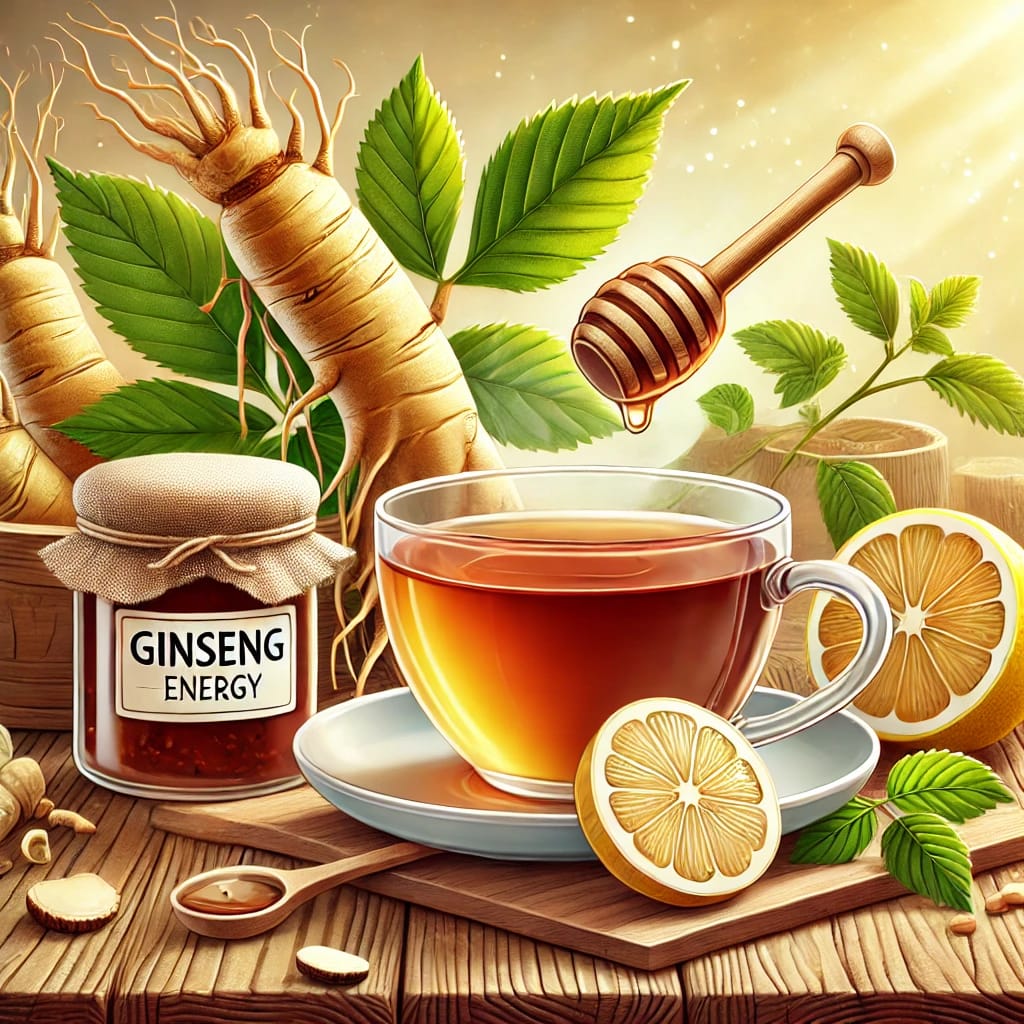
Ginseng has been the cornerstone of East Asian medicine for over 5,000 years — prized above almost all other herbs as a tonic for vitality, longevity, and mental clarity. Modern clinical research has confirmed what traditional healers observed: ginseng’s effects on energy, cognitive function, immunity, and stress resilience are real, measurable, and significant.
Types of Ginseng: Choosing the Right One
- Panax ginseng (Korean/Asian) — most potent; best for cognitive energy and physical performance. Warming, stimulating character.
- American ginseng (Panax quinquefolius) — cooler, more calming; better for immune support and anxiety-prone individuals.
- Red ginseng — steamed Panax ginseng; enhanced ginsenoside profile, better bioavailability, stronger evidence overall.
- Siberian ginseng (Eleutherococcus) — not a true Panax; classified as an adaptogen with performance and immune benefits.
How Ginseng Boosts Energy (Without Caffeine’s Downsides)
Unlike caffeine which blocks adenosine (masking tiredness), ginseng’s active compounds — ginsenosides — address energy at its source through several mechanisms: enhancing mitochondrial ATP production via AMPK activation; regulating the HPA axis and adrenal function to prevent stress-driven energy depletion; increasing nitric oxide synthesis for better circulation and oxygen delivery; and modulating dopamine, serotonin, and acetylcholine for sharper, more motivated focus.
Research-Backed Benefits
Mental Energy and Cognitive Performance
Northumbria University researchers conducted a series of rigorous double-blind trials finding that 200–400mg Panax ginseng significantly improved working memory, mental arithmetic speed, and reaction time under cognitive pressure. A 2010 systematic review of 9 RCTs confirmed consistent improvements in attention, processing speed, and memory. Ginseng appears particularly effective under mental fatigue conditions — when cognitive resources are most stretched.
Physical Performance and Recovery
A 2013 randomized trial found Korean red ginseng over 4 weeks significantly improved VO2 max, reduced exercise-induced cortisol, and accelerated post-training muscle strength recovery in competitive athletes. Multiple studies confirm reduced perceived exertion at the same physical workload — meaning the same effort feels easier with ginseng supplementation.
Stress Adaptation and Mood
A 2013 PLOS ONE study found Panax ginseng significantly reduced both psychological and physiological stress markers — lowering cortisol response and improving mood vs. placebo. A 2014 study in chronic fatigue syndrome patients showed significant improvements in wellbeing, mood, and quality of life over 4 weeks of red ginseng supplementation.
Immune Support
American ginseng has strong clinical evidence for immune function. An RCT found participants taking American ginseng during cold/flu season had 25% fewer colds, shorter duration, and less severe symptoms than placebo. The mechanism involves stimulation of NK cells, macrophages, and interferon production.
Blood Sugar Regulation
Multiple trials demonstrate blood sugar-lowering effects. American ginseng taken 40 minutes before a glucose challenge significantly reduced post-meal glucose spikes in both diabetic and non-diabetic subjects. Stable blood sugar directly supports consistent, crash-free energy throughout the day.
How to Use Ginseng Effectively
| Type | Best For | Dose | Timing |
|---|---|---|---|
| Panax / Red Ginseng | Mental energy, focus, performance | 200–400mg extract | Morning with food |
| American Ginseng | Immune support, calmer energy | 100–200mg | Morning or before meals |
Cycling: Use in 8–12 week cycles with 4-week breaks to maintain sensitivity. Choose standardized extracts specifying ginsenoside percentage (4–7% for Panax).
Safety Considerations
- May enhance anticoagulant effects (warfarin) — consult your doctor
- Blood sugar-lowering effects may interact with diabetes medications
- Some experience insomnia — avoid late-day dosing
- Mild estrogenic activity in some ginsenosides — caution with hormone-sensitive conditions
Conclusion
Ginseng’s 5,000-year reputation as humanity’s premier energy tonic is well-supported by modern clinical evidence. For mental energy, physical performance, stress adaptation, immune support, and blood sugar stability — the data is consistently positive. Korean red ginseng is the most potent choice for cognitive and physical energy; American ginseng is gentler and better for immune support. Choose standardized extracts, cycle your use, and give it 4–6 weeks to build its full effect.
Also explore: Energy Benefits of Cordyceps and Top Adaptogenic Herbs.
Some links in this article are affiliate links. As an Amazon Associate, PIEWell earns from qualifying purchases — at no extra cost to you. We only recommend products we’ve researched thoroughly.
Scientific References
📄 Anti-fatigue effects of Panax ginseng (PLoS One, 2013)
📄 Ginseng and cognitive performance (Cochrane Database, 2010)
hannel-opacity”/>How Much Ginseng Should You Take?
The optimal dosage of ginseng depends on the type you choose. For Panax (Asian) ginseng, most studies use 200–400 mg of standardized extract daily. American ginseng is typically dosed at 100–200 mg per day. Korean red ginseng, a steamed form of Panax ginseng, is often taken at 500–2,000 mg daily.
Start with the lower end of the dosage range and gradually increase over 1–2 weeks. Ginseng is best taken in the morning or early afternoon, as its energizing effects may interfere with sleep if taken too late in the day. Most experts recommend cycling ginseng — taking it for 2–3 weeks, then pausing for 1 week — to maintain its effectiveness.
Ginseng vs Other Energy Supplements
Unlike caffeine, which provides a quick but short-lived energy spike followed by a crash, ginseng offers sustained energy throughout the day. This makes it an excellent alternative for people who are sensitive to caffeine or want to reduce their coffee intake without sacrificing alertness.
Compared to other adaptogens like rhodiola or ashwagandha, ginseng has the strongest evidence for directly boosting physical energy and reducing fatigue. Rhodiola tends to be better for mental stamina and stress resilience, while ashwagandha excels at lowering cortisol and improving sleep quality. Many people find that combining ginseng with rhodiola provides comprehensive energy support — physical and mental.
Who Should Consider Ginseng?
Ginseng is particularly beneficial for people experiencing chronic fatigue, those recovering from illness, and older adults looking to maintain vitality. Athletes and active individuals may also benefit from ginseng’s ability to improve exercise performance and reduce post-workout fatigue.
However, ginseng may not be suitable for everyone. People taking blood-thinning medications, diabetes drugs, or immunosuppressants should consult their healthcare provider before starting ginseng. Pregnant or breastfeeding women should also avoid ginseng due to limited safety data.
Frequently Asked Questions
Can I take ginseng every day?
Yes, but most experts recommend cycling — 2–3 weeks on, 1 week off — to prevent your body from building tolerance. Continuous daily use for more than 3 months is generally not recommended without medical supervision.
How long does it take for ginseng to work?
Some people notice improved energy within a few days, but the full benefits of ginseng typically develop over 2–4 weeks of consistent use. Cognitive benefits may take even longer to become noticeable.
Is ginseng better than coffee for energy?
Ginseng provides smoother, longer-lasting energy without the jitters or crashes associated with caffeine. While coffee works faster (within 15–30 minutes), ginseng supports sustained energy throughout the day and offers additional health benefits like immune support and improved cognitive function.
👉 How to Increase Energy Naturally
👉 Spirulina: Natural Superfood
Dosage and How to Take Ginseng
The optimal ginseng dosage depends on the type and your specific health goals. For Panax ginseng (Asian/Korean ginseng), clinical trials have used doses of 200-400 mg daily of standardized root extract (typically standardized to 4-7% ginsenosides). For American ginseng (Panax quinquefolius), similar doses of 200-400 mg are common. Ginseng is best taken in the morning or early afternoon, as its stimulating effects may interfere with sleep if taken later in the day.
Many practitioners recommend cycling ginseng — for example, taking it for 2-3 weeks followed by a 1-week break — to prevent tolerance and maintain sensitivity to its effects. Ginseng is available as capsules, liquid extracts, teas, and even chewable tablets. Capsules standardized to ginsenoside content offer the most consistent dosing.
Who Should Consider Ginseng
- People experiencing chronic fatigue that is not explained by an underlying medical condition
- Students and professionals who need sustained mental energy and focus during demanding periods
- Athletes looking for a natural performance enhancer — ginseng may improve endurance and reduce exercise-induced fatigue
- Older adults experiencing age-related decline in energy and cognitive sharpness
- People recovering from illness who need support rebuilding their energy reserves
Who should avoid ginseng: People taking blood thinners (warfarin), those with hormone-sensitive conditions (ginseng may have estrogenic effects), people with uncontrolled high blood pressure, and anyone taking MAO inhibitors or stimulant medications. Pregnant and breastfeeding women should consult their healthcare provider before use.