
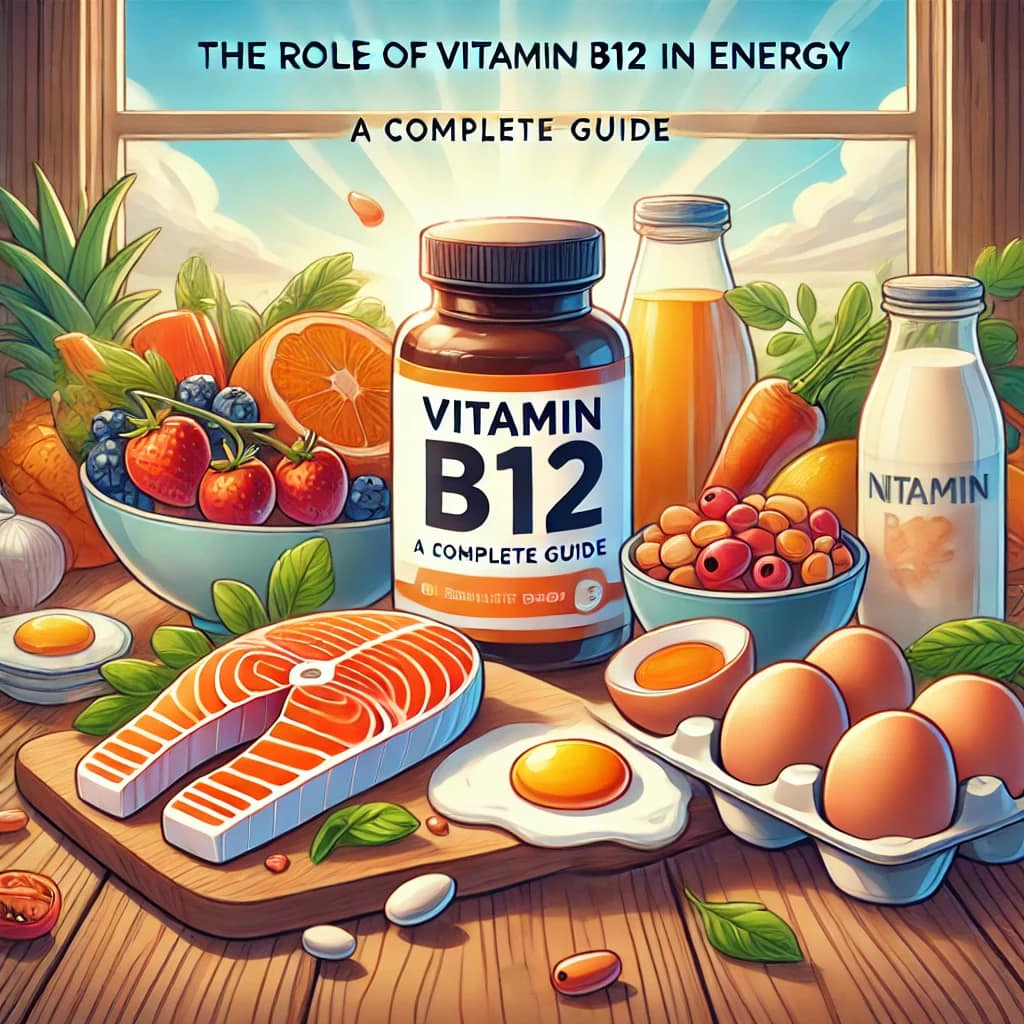
If you’re feeling persistently tired despite adequate sleep, vitamin B12 deficiency could be the culprit — and it’s far more common than most people realize. B12 is one of the most critical vitamins for energy metabolism, neurological function, and red blood cell production, yet it’s frequently lacking in modern diets. Here’s everything you need to know.
Why B12 Is Essential for Energy
B12 doesn’t directly energize you like caffeine — it’s a critical cofactor in the metabolic processes that produce energy at the cellular level through three key mechanisms:
- Red blood cell production: B12 is essential for DNA synthesis in red blood cell precursors. Deficiency produces abnormally large, dysfunctional cells (megaloblastic anemia) that can’t carry oxygen efficiently — causing tissue hypoxia, fatigue, and weakness.
- Myelin synthesis: B12 is required to produce myelin — the protective sheath enabling fast nerve signal transmission. Deficiency causes demyelination, resulting in brain fog, tingling, and coordination problems.
- Krebs cycle function: B12 is a cofactor in converting methylmalonyl-CoA to succinyl-CoA — a core step in ATP production. Deficiency impairs this step in every cell in the body.
How Common Is B12 Deficiency?
Significantly underdiagnosed. Estimates suggest 6% of adults under 60 and nearly 20% over 60 in developed countries are deficient. High-risk groups include: vegans and vegetarians (B12 is found almost exclusively in animal products); adults over 50 (declining gastric acid reduces food-source B12 absorption); people taking metformin or acid-reducing medications (PPIs, H2 blockers); and those with Crohn’s disease, celiac, or gastric surgery history.
Symptoms of Deficiency
- Persistent fatigue and weakness not explained by sleep
- Brain fog, poor concentration, difficulty thinking clearly
- Tingling or numbness in hands and feet
- Pale or slightly yellow skin
- Mood changes — depression, irritability, anxiety
- Memory problems (B12 deficiency is a reversible cause of dementia-like symptoms)
- Swollen, inflamed tongue (glossitis)
Best Food Sources of B12
| Food | B12 per serving | % Daily Value |
|---|---|---|
| Clams (85g cooked) | 84mcg | 3,500% |
| Beef liver (85g) | 70mcg | 2,917% |
| Sardines (85g) | 7.6mcg | 317% |
| Salmon (85g cooked) | 4.9mcg | 204% |
| Beef (85g cooked) | 2.4mcg | 100% |
| Eggs (2 large) | 1.2mcg | 50% |
| Fortified plant milk | 1.2–3mcg | 50–125% |
Supplement Forms: What Matters
Methylcobalamin vs. Cyanocobalamin
Most cheap supplements use cyanocobalamin — a synthetic form requiring conversion to active methylcobalamin. Methylcobalamin is the active form: no conversion needed, better tissue retention, and preferred for neurological protection. For most people either works, but methylcobalamin is superior for those with neurological symptoms or MTHFR gene variants.
Delivery Methods
- Sublingual tablets/liquids — absorbed directly into bloodstream, ideal for absorption issues
- High-dose oral (1000–2000mcg) — at very high doses, passive diffusion compensates for intrinsic factor deficiency
- Injections — most reliable for severe deficiency or complete absorption failure
Recommended Doses
- General prevention (omnivores over 50): 25–100mcg daily
- Vegans/vegetarians: 250mcg daily or 2500mcg weekly
- Treating confirmed deficiency: 1000–2000mcg daily for 1–3 months, then maintenance
What to Expect
If your fatigue is caused by B12 deficiency, supplementation can produce dramatic improvements — noticeable within 2–4 weeks, with full recovery over 2–3 months. If your B12 levels are already adequate, additional B12 won’t provide an energy boost — it only corrects deficiency. Get tested first. A simple serum B12 test (and ideally methylmalonic acid for functional deficiency) tells you whether you’re addressing a real issue.
Conclusion
Vitamin B12 is non-negotiable for energy, neurological health, and cognitive function. Its deficiency is common, often undiagnosed, and produces some of the most debilitating and reversible fatigue patterns in modern health. If you’re in a risk group — vegan, over 50, taking certain medications, or experiencing unexplained fatigue — getting tested and supplementing appropriately is one of the highest-value health interventions available. Choose methylcobalamin, sublingual for absorption issues, and give it 4–8 weeks to see full results.
See also: How to Increase Energy Naturally and Foods That Boost Energy.
Some links in this article are affiliate links. As an Amazon Associate, PIEWell earns from qualifying purchases — at no extra cost to you. We only recommend products we’ve researched thoroughly.
Scientific References
📄 Vitamin B12 deficiency and neurological disorders (Nutrients, 2016)
📄 B12 supplementation in deficient patients (BMC Clin Pharmacol, 2003)
hannel-opacity”/>Signs of Vitamin B12 Deficiency
B12 deficiency is more common than most people realize, affecting up to 15% of the general population. The symptoms often develop gradually and can be easily mistaken for other conditions. Early signs include persistent fatigue, weakness, and difficulty concentrating — often described as “brain fog.”
More advanced deficiency can cause tingling or numbness in the hands and feet (peripheral neuropathy), balance problems, mood changes including depression and irritability, and a sore or swollen tongue. In severe cases, B12 deficiency can lead to megaloblastic anemia, where the body produces abnormally large red blood cells that cannot function properly.
Best Sources of Vitamin B12
Animal products are the richest natural sources of B12. Clams and beef liver top the list with over 1,000% of the daily value per serving. Other excellent sources include sardines, salmon, tuna, beef, milk, yogurt, and eggs. Just 3 ounces of cooked clams provides about 84 mcg of B12 — far exceeding the recommended daily intake of 2.4 mcg.
For vegetarians and vegans, fortified foods are essential. Nutritional yeast, fortified plant milks, fortified cereals, and fortified tofu can help meet daily B12 needs. However, plant-based eaters should strongly consider supplementation, as naturally occurring B12 in plant foods is minimal and often in forms the body cannot easily absorb.
B12 Supplements: Which Form Is Best?
Vitamin B12 supplements come in several forms, each with different absorption rates. Methylcobalamin is the most bioavailable form and is naturally found in the body. It’s particularly beneficial for neurological health and is the preferred choice for most people. Cyanocobalamin is the most common and affordable form found in supplements, though it requires conversion in the body.
For supplementation, doses typically range from 250 mcg to 1,000 mcg daily for maintenance, and up to 2,000 mcg for those with confirmed deficiency. Sublingual tablets (dissolved under the tongue) may offer better absorption than regular oral supplements, especially for people with digestive issues that affect B12 absorption.
Frequently Asked Questions
Can B12 give you more energy if you’re not deficient?
If your B12 levels are already adequate, additional supplementation is unlikely to boost your energy further. B12 supplements primarily help restore energy in people who are deficient. However, maintaining optimal levels (above 500 pg/mL) may support better overall cognitive function and mood.
How long does it take for B12 supplements to work?
If you’re deficient, you may notice improved energy and mental clarity within 1–2 weeks of starting supplementation. Full neurological recovery can take several months. For injectable B12, effects are often felt within 48–72 hours.
Can you take too much B12?
Vitamin B12 is water-soluble, meaning excess amounts are typically excreted through urine. There is no established upper intake limit, and toxicity is extremely rare even at high doses. However, it’s still best to follow recommended dosages unless directed otherwise by your healthcare provider.
👉 How to Increase Energy Naturally
👉 Spirulina: Natural Superfood