
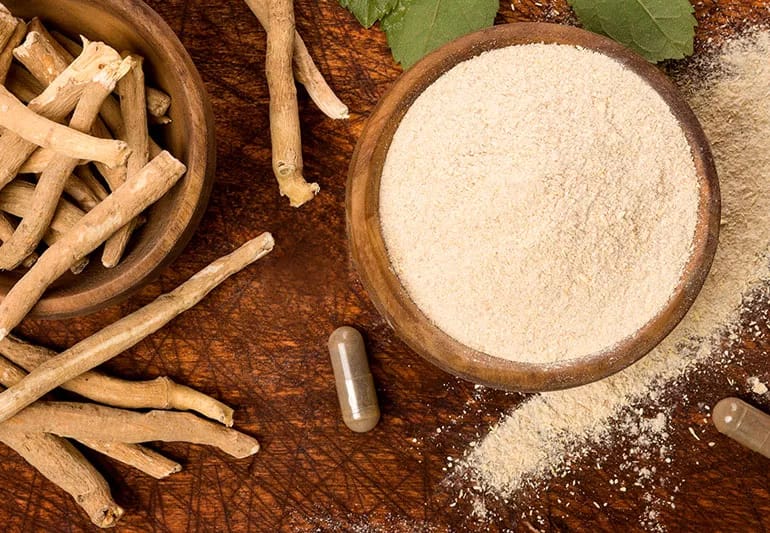
Ashwagandha (Withania somnifera) has been the crown jewel of Ayurvedic medicine for over 3,000 years — and today, it’s also one of the most rigorously studied herbs in Western clinical research. With multiple randomized controlled trials confirming effects on stress, anxiety, sleep, physical performance, hormonal health, and cognitive function, ashwagandha stands apart as one of the few natural supplements that genuinely delivers on its reputation. Here’s a comprehensive look at what the science shows.
What Is Ashwagandha?
Ashwagandha is an evergreen shrub native to India, the Middle East, and parts of Africa. Its name in Sanskrit means “smell of horse” — referring to both the root’s distinctive earthy aroma and the traditional belief that it confers the strength and vitality of a horse. The medicinal part is the root, which contains the primary active compounds: withanolides (steroidal lactones), alkaloids, and saponins.
Classified as an adaptogen, ashwagandha helps the body adapt to physical, chemical, and psychological stressors by modulating the HPA (hypothalamic-pituitary-adrenal) axis — the hormonal system governing your cortisol and stress response. Unlike stimulants that force performance or sedatives that suppress it, ashwagandha works with your body’s own regulatory systems to restore balance.
1. Stress and Anxiety Reduction
Ashwagandha’s most well-established benefit is its powerful effect on stress and anxiety. Multiple high-quality clinical trials have demonstrated significant, measurable reductions in both subjective stress scores and objective cortisol levels:
- A 2012 RCT in the Indian Journal of Psychological Medicine found 300mg twice daily reduced cortisol by 27.9% and dramatically improved Perceived Stress Scale scores over 60 days
- A 2019 trial using 240mg once daily found a 23% cortisol reduction and significant anxiety score improvements vs. placebo
- A 2021 study found ashwagandha produced anxiety reductions comparable to low-dose lorazepam (a prescription benzodiazepine) — without dependency or sedation
The mechanism: withanolides regulate GABA-A receptors (calming neurotransmitter system) and modulate the HPA axis at multiple levels, reducing both the hormonal and neurological components of the stress response.
2. Sleep Quality
Ashwagandha improves sleep through two distinct pathways. First, by reducing cortisol — the primary hormone that keeps the brain alert and prevents sleep onset. Second, through a specific compound called triethylene glycol found in ashwagandha leaves and roots, which has direct sleep-inducing properties.
A 2019 randomized, double-blind study in PLOS ONE found that participants taking ashwagandha root extract for 10 weeks showed significant improvements across all sleep parameters: sleep onset latency (time to fall asleep), total sleep time, sleep efficiency, and subjective sleep quality — alongside lower anxiety and cortisol. A 2020 study confirmed these findings, with particular improvement in non-restorative sleep.
Ashwagandha is particularly valuable for people whose insomnia is stress-driven — the “tired but wired” pattern where exhaustion coexists with an inability to switch off.
3. Athletic Performance and Physical Strength
Ashwagandha’s performance-enhancing properties have made it one of the most popular natural sports supplements. A landmark 2015 randomized controlled trial found that men taking 300mg twice daily for 8 weeks showed significant improvements in:
- Muscle strength (bench press and leg extension) vs. placebo
- Muscle size (arm circumference and chest)
- Exercise recovery (lower muscle damage markers)
- Body fat percentage reduction
- Testosterone levels (+15%)
A 2012 study in elite cyclists found ashwagandha significantly improved VO2 max and time-to-exhaustion. The performance benefits appear to stem from multiple pathways: reduced exercise-induced cortisol (which otherwise breaks down muscle), increased testosterone (which drives muscle protein synthesis), and improved mitochondrial energy production.
4. Testosterone and Male Hormonal Health
Chronic stress suppresses testosterone production through cortisol — which directly inhibits the hypothalamic-pituitary-gonadal (HPG) axis. By significantly reducing cortisol, ashwagandha indirectly supports testosterone levels. Multiple studies show this effect is clinically meaningful:
A 2019 clinical study found men with low testosterone who took ashwagandha for 8 weeks experienced a 14.7% increase in testosterone along with significantly improved vitality, sexual health, and mood. A separate study in men with infertility showed ashwagandha increased sperm count by 167%, sperm motility by 57%, and testosterone by 17% over 90 days.
5. Cognitive Function and Brain Health
Ashwagandha has direct neuroprotective properties independent of its stress-lowering effects. Its withanolides inhibit the formation of beta-amyloid plaques associated with Alzheimer’s disease and promote the clearance of existing amyloid aggregates. They also stimulate nerve growth and regeneration (similar to, but via different mechanisms than Lion’s Mane mushroom).
A 2017 RCT found 300mg twice daily for 8 weeks significantly improved immediate and general memory, executive function, attention, and information processing speed compared to placebo in adults with mild cognitive impairment. A 2020 study in healthy adults confirmed improvements in reaction time and cognitive flexibility with ashwagandha supplementation.
6. Blood Sugar and Metabolic Health
Several studies suggest ashwagandha has insulin-sensitizing effects. It appears to activate GLUT4 glucose transporters in muscle cells, improving cellular glucose uptake. A 2015 study found ashwagandha significantly reduced fasting blood sugar in adults with type 2 diabetes. A 2019 study in healthy adults showed reduced blood sugar levels and improved insulin sensitivity. Withanolides may also reduce cortisol-driven blood sugar spikes — particularly relevant since chronic stress is a major driver of insulin resistance.
7. Thyroid Support
A 2018 study found ashwagandha root extract significantly increased serum T3 and T4 thyroid hormone levels in people with subclinical hypothyroidism over 8 weeks — a finding consistent with ashwagandha’s traditional use for supporting metabolic energy. The mechanism likely involves both its cortisol-lowering effects (cortisol suppresses thyroid function) and direct stimulation of thyroid hormone synthesis.
How to Take Ashwagandha for Best Results
| Goal | Dose | Timing | Form |
|---|---|---|---|
| Stress & anxiety | 300–600mg/day | Morning or split | KSM-66 or Sensoril |
| Sleep quality | 300–600mg/day | Evening | KSM-66 extract |
| Athletic performance | 600mg/day | Morning | KSM-66 extract |
| Cognitive support | 600mg/day | Morning | Standardized extract |
Look for products standardized to at least 5% withanolides. KSM-66 and Sensoril are the best-studied patented forms with consistent research backing. Full effects develop over 6–8 weeks of consistent daily use.
Safety and Considerations
Ashwagandha has an excellent safety record in clinical trials. Rare adverse effects include mild GI discomfort. Important cautions:
- Pregnancy: Avoid — may stimulate uterine contractions
- Thyroid medications: May enhance effects; monitor with your doctor
- Immunosuppressants: Immune-modulating effects may interact
- Rare liver cases: Very rare reports of liver enzyme elevations at very high doses — use standard doses and avoid combining with other hepatotoxic supplements
Conclusion
Ashwagandha’s combination of breadth and depth of evidence is genuinely rare in the world of natural supplements. Few herbs have clinical trial data supporting effects across so many systems: stress hormones, sleep, athletic performance, testosterone, cognition, blood sugar, and thyroid function — all through a mechanism that works with your body’s own regulatory systems rather than overriding them.
For most healthy adults dealing with stress, poor sleep, low energy, or wanting to support long-term vitality, ashwagandha is one of the highest-value supplements available. Start with a quality standardized extract, be consistent for 6–8 weeks, and pay attention to the cumulative changes in your stress response, sleep quality, and energy over time.
For more: Best Adaptogens for Mental Clarity & Stress and Ashwagandha at Night vs Morning.
Frequently Asked Questions
How long does it take for ashwagandha to work?
Most studies show noticeable effects after 2–4 weeks of daily use, with fuller benefits after 6–8 weeks. Sleep and stress effects often appear first, while strength and cognitive benefits take longer. Consistency matters more than the exact dose — take it every day rather than only on stressful days.
When should I take ashwagandha, morning or night?
It depends on your goal. Take it in the morning for energy, focus and athletic performance, or in the evening for sleep and relaxation. Our detailed comparison explains the differences:
Is ashwagandha safe to take every day?
In clinical trials, daily doses of 300–600 mg of standardized root extract were well tolerated for up to 8–12 weeks. Mild stomach upset is the most common side effect. Avoid ashwagandha if you are pregnant, and talk to your doctor first if you take thyroid, blood pressure or immune-suppressing medication.
Can I take ashwagandha with other supplements?
Ashwagandha pairs well with magnesium, vitamin D and other adaptogens such as rhodiola. Avoid combining it with sedatives or alcohol, and check with your doctor if you take prescription medication.
Disclaimer: This article is for general information only and is not medical advice. Talk to your doctor before starting ashwagandha, especially if you are pregnant, breastfeeding, or taking medication.
Ashwagandha at Night vs Morning: When to Take It for Best Results